
How to Build AI Apps with Oscalet (Complete Guide 2026)
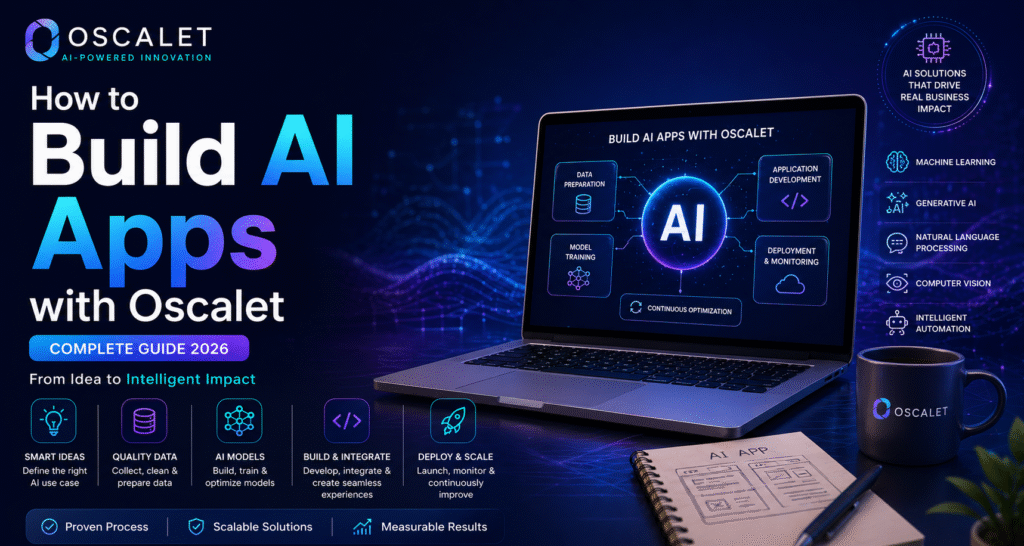
Summary: Learn how to build scalable AI applications with Oscalet through a structured process that includes use case definition, data strategy, model development, integration, and continuous optimization to deliver high-performance, business-driven AI solutions. Building AI-powered applications is no longer limited to large enterprises. Businesses across industries are now leveraging AI application development to automate operations, enhance customer experiences, and unlock new revenue opportunities. However, building a scalable and production-ready AI app requires the right strategy, technology, and execution partner. This guide explains how to build AI apps with Oscalet, covering the complete process from idea validation to deployment and optimization, while ensuring your solution is aligned with business goals. What is AI Application Development? AI application development is the process of designing and building software that uses artificial intelligence technologies such as machine learning, natural language processing, computer vision, and generative AI to perform intelligent tasks. Unlike traditional software, AI applications learn from data, adapt to new inputs, and continuously improve over time. This makes them highly effective for automation, prediction, and personalization. Why Businesses Choose AI App Development? Organizations invest in AI development services to gain a competitive advantage and improve operational efficiency. AI applications help businesses: Automate repetitive tasks Analyze large datasets for insights Deliver personalized user experiences Improve decision-making accuracy Scale operations efficiently From startups to enterprises, AI is becoming a core component of digital transformation strategies. Why Choose Oscalet for AI Application Development? Oscalet stands out as an AI development company by focusing on building business-driven AI solutions rather than generic implementations. Oscalet combines deep expertise in machine learning development, generative AI development, AI chatbot development, and computer vision to deliver custom AI applications tailored to specific industries. The approach includes: Understanding business objectives first Designing scalable AI architecture Using modern AI frameworks and tools Ensuring seamless integration with existing systems Providing continuous optimization and support This ensures that every AI application delivers measurable results and long-term value. Step-by-Step Process to Build AI Apps with Oscalet 1. Problem Identification and Use Case Definition The first step is identifying the right problem to solve using AI. Not every problem requires artificial intelligence, so defining a clear use case is essential. Oscalet works closely with businesses to: Identify high-impact use cases Define success metrics Evaluate feasibility This step ensures that the AI solution aligns with business goals. 2. Data Strategy and Preparation Data is the foundation of any AI application. Without high-quality data, models cannot perform effectively. Oscalet helps businesses: Collect relevant data from multiple sources Clean and preprocess data Build scalable data pipelines A strong data strategy reduces development time and improves model accuracy. 3. Choosing the Right AI Technology Different use cases require different AI technologies. Oscalet selects the most suitable approach based on the problem: Machine learning for predictive analytics Generative AI for content creation and automation NLP for chatbots and conversational AI Computer vision for image and video analysis Choosing the right technology ensures efficiency and cost optimization. 4. Model Development and Training This stage involves building and training AI models using historical data. Oscalet focuses on: Selecting optimal algorithms Training models with high accuracy Performing multiple iterations for improvement Validating model performance Advanced tools such as TensorFlow, PyTorch, and LLM frameworks are used for building robust models. 5. AI Application Development and Integration Once the model is ready, it is integrated into a functional application. This includes: Backend development API integration UI/UX design Integration with CRM, ERP, or other systems The goal is to create a seamless and user-friendly experience. 6. Testing and Quality Assurance AI systems require extensive testing to ensure reliability. Oscalet performs: Performance testing Accuracy validation Bias detection Stress testing This ensures that the AI application works effectively in real-world conditions. 7. Deployment and Launch The AI application is deployed on cloud or on-premise infrastructure. Oscalet ensures: Scalable deployment Secure environment setup Smooth transition to production 8. Monitoring and Continuous Optimization AI applications require ongoing improvement. Oscalet provides: Performance monitoring Model retraining Data updates Feature enhancements This ensures long-term success and scalability. Technologies Used by Oscalet Oscalet leverages modern AI tools and frameworks to build high-performance applications. Key technologies include: Machine learning frameworks Generative AI models Natural language processing tools Computer vision libraries Cloud platforms for scalability This technology stack ensures flexibility and future-ready solutions. Types of AI Applications You Can Build with Oscalet AI Chatbots Automate customer support and engagement Recommendation Systems Provide personalized product or content suggestions Predictive Analytics Tools Forecast trends and optimize decision-making Generative AI Applications Create content, automate workflows, and build AI assistants Computer Vision Systems Analyze images and videos for insights Benefits of Building AI Apps with Oscalet Businesses working with Oscalet gain multiple advantages. Faster Time to Market Structured processes reduce development time Scalable Architecture Applications are built for growth Custom AI Solutions Tailored to specific business needs Reduced Risk Expert execution minimizes failures High ROI Focus on measurable outcomes Common Challenges in AI App Development Data Quality Issues Poor data leads to inaccurate models Integration Complexity Connecting AI with existing systems can be difficult High Initial Investment AI requires upfront investment Skill Shortage Experienced AI developers are limited Oscalet addresses these challenges with structured processes and expert teams. How Oscalet Ensures High-Performance AI Applications Oscalet follows best practices to ensure success: Focus on data quality Use scalable architecture Implement continuous monitoring Optimize models regularly This ensures consistent performance and long-term reliability. Future of AI Application Development AI is rapidly evolving, and its role in business will continue to grow. Key trends include: Rise of generative AI applications Growth of AI agents and automation Increased adoption of LLM-based applications Expansion of AI across industries Businesses that invest in AI today will gain a strong competitive advantage in the future. Frequently Asked Questions How to build an AI app? Building an AI app involves defining a use case, preparing data, training models, integrating them into applications, and continuously optimizing
What is AI Application Development? Complete Guide (2026) for Businesses & Startups
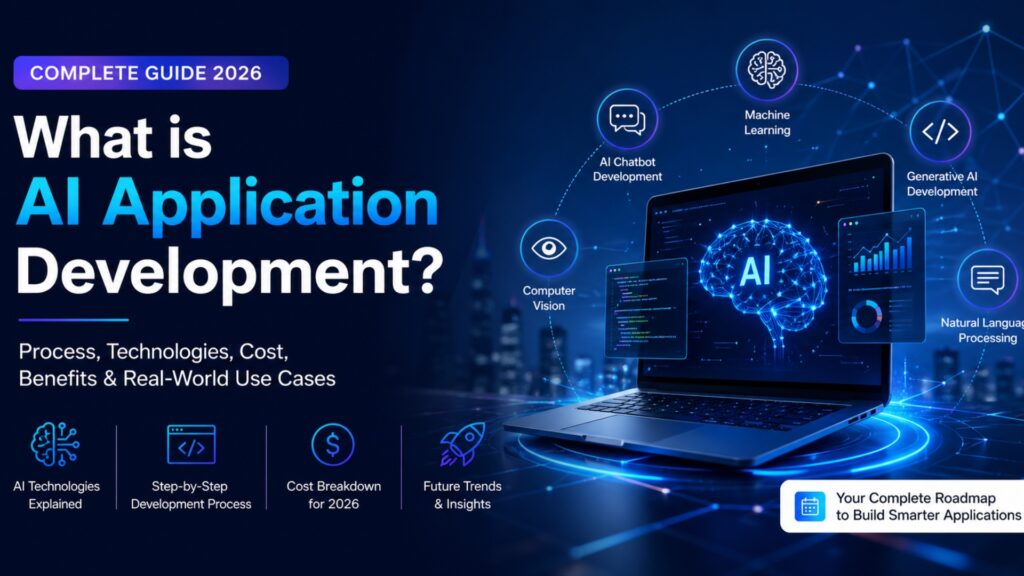
Summary: Learn what AI application development is, including process, cost, tools, and real-world use cases. A complete 2026 guide to building scalable AI-powered applications for businesses. What is AI Application Development? Key Characteristics of AI Applications Core Technologies Used in AI Application Development Architecture of AI Applications AI Application Development Process AI App Development Cost in 2026 Business Benefits of AI Application Development Real-World Use Cases of AI Applications Challenges in AI Application Development When to Work with an AI Development Company? Frequently Asked Questions Artificial intelligence is no longer an experimental technology reserved for large enterprises. In 2026, AI application development has become a core capability for businesses aiming to build scalable, data-driven, and intelligent digital products. From startups to global enterprises, organizations are actively investing in AI app development to automate operations, enhance decision-making, and deliver personalized user experiences. This guide provides a comprehensive and practical understanding of AI application development, covering its definition, architecture, development process, cost structure, technologies, and real-world applications while also helping you understand when to work with an AI development company or hire AI developers. What is AI Application Development? AI application development refers to the process of designing, building, and deploying software applications that use artificial intelligence technologies such as machine learning, natural language processing, computer vision, and generative AI to perform tasks that typically require human intelligence. Unlike traditional software development, where systems follow predefined rules, AI software development enables applications to learn from data, identify patterns, and continuously improve performance over time. AI applications are capable of performing tasks such as prediction, classification, recommendation, automation, and content generation. These capabilities make artificial intelligence development essential for modern digital transformation strategies. Key Characteristics of AI Applications AI applications differ significantly from traditional applications in several ways: They are data-driven rather than rule-based They continuously learn and adapt instead of remaining static They produce probabilistic outputs instead of deterministic results They require ongoing monitoring and optimization after deployment These characteristics make AI development services fundamentally different from standard software engineering. Core Technologies Used in AI Application Development AI application development integrates multiple technologies and disciplines. Machine Learning Development Machine learning enables systems to learn from historical data and make predictions or decisions. It is widely used in fraud detection, recommendation systems, and demand forecasting. Generative AI Development Generative AI allows applications to create new content such as text, images, code, and videos. It powers tools like AI assistants and content automation platforms. AI Chatbot Development Conversational AI systems use natural language processing to understand and respond to user queries. These are widely used in customer support and engagement platforms. Computer Vision Development Computer vision enables machines to interpret visual data such as images and videos. It is used in healthcare diagnostics, surveillance systems, and retail analytics. Natural Language Processing Natural language processing enables machines to understand, interpret, and generate human language, making it essential for chatbots, search engines, and sentiment analysis tools. Architecture of AI Applications A robust AI application is built on a layered architecture. Data Layer This includes structured and unstructured data collected from multiple sources. Data quality directly impacts the success of AI applications. Model Layer This layer contains machine learning or deep learning models that process data and generate predictions. Processing Layer This includes feature engineering, training pipelines, and optimization techniques that improve model accuracy. Deployment Layer This ensures that AI models are accessible through APIs or integrated into applications. Application Layer This is the user-facing interface where insights and predictions are delivered. AI Application Development Process A structured AI development process is essential for building reliable systems. Problem Definition Clearly define the business problem and expected outcomes. This step determines whether AI is the right solution. Data Collection and Preparation Gather relevant datasets and prepare them through cleaning and labeling. High-quality data is critical for accurate AI models. Model Development Select algorithms and train models using historical data. This step involves experimentation and validation. Integration and Development Integrate the trained model into the application using APIs and backend systems. Testing and Validation Evaluate model performance, accuracy, and reliability. Identify biases and errors. Deployment Deploy the AI application on cloud or on-premise infrastructure. Monitoring and Optimization Continuously monitor performance and retrain models to improve results. AI App Development Cost in 2026 The cost of AI application development varies based on complexity, data requirements, and customization. Basic AI applications typically range from $1000 to $30,000 Mid-level AI solutions range from $30,000 to $100,000 Enterprise-grade AI platforms often exceed $100,000 Key cost factors include data availability, model complexity, infrastructure requirements, and integration scope. Businesses evaluating AI development services should consider long-term maintenance and optimization costs as well. Business Benefits of AI Application Development Organizations investing in AI app development experience measurable benefits. Improved Decision Making AI systems analyze large datasets and provide actionable insights. Operational Efficiency Automation reduces manual work and increases productivity. Personalization AI enables highly personalized user experiences at scale. Scalability AI systems can handle increasing workloads without proportional resource growth. Competitive Advantage Companies adopting AI early gain a significant edge in their industry. Real-World Use Cases of AI Applications AI application development is transforming multiple industries. Healthcare AI is used for disease prediction, medical imaging analysis, and patient monitoring. Retail AI powers recommendation engines, inventory management, and demand forecasting. Finance AI enables fraud detection, credit scoring, and algorithmic trading. Logistics AI optimizes route planning, delivery efficiency, and supply chain operations. Manufacturing AI supports predictive maintenance and quality control. Challenges in AI Application Development Despite its benefits, AI development presents several challenges. Data Quality Issues Poor data leads to inaccurate predictions. High Development Costs AI projects require significant investment in talent and infrastructure. Integration Complexity Integrating AI systems with existing platforms can be complex. Ethical and Bias Concerns AI models may produce biased outcomes if not properly managed. When to Work with an AI Development Company? Businesses often partner with an AI development company when they lack in-house expertise or need to scale quickly. An experienced AI